
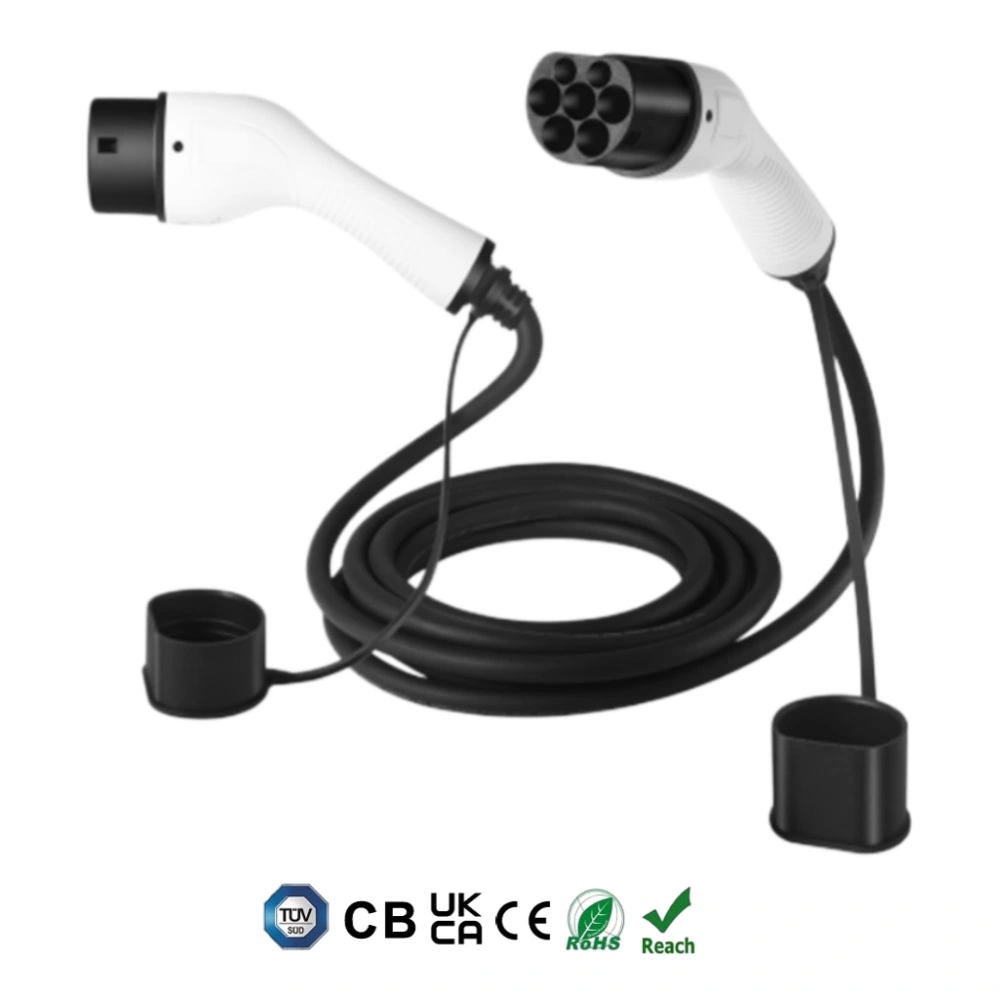
Describes the stated power, current, voltage, phase, and model configuration for the cable version.
IEC 62196 / Type 2 To Type 2 / V1 Ratings
Type 2 EV Charging Cable Ratings For Commercial Charging Systems
Match current, voltage, phase, and rated power before you specify an ev charging cable for a fleet, charging site, or OEM program. This type 2 charging cable family covers 3.5kW, 7kW, 11kW, and 22kW configurations with regular 5M, 7M, and 10M lengths.
Type 2 to Type 2 | 16A / 32A | Single-phase / three-phase | 3.5kW–22kW
System Boundary
Keep cable capacity separate from the complete charging result
A clear technical brief becomes easier to review when each part of the charging arrangement keeps its own responsibility.
The vehicle's onboard charging system may accept less power than the cable rating.
EVSE settings, available phases, protective equipment, installation capacity, and local requirements affect the final result.
Protection And Test Structure
Built around the parts that face handling and weather
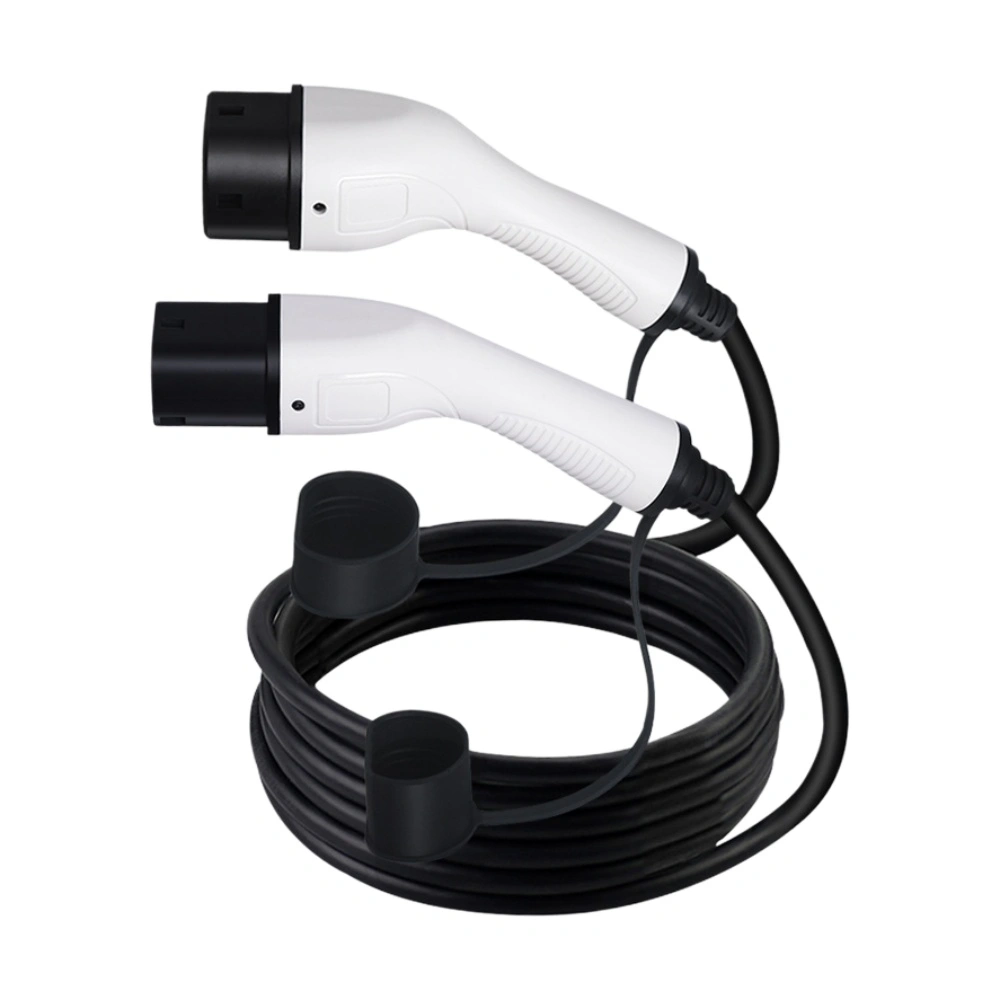
The V1 cable uses a TPU jacket, an attached silicone dust-proof cap, and an integrated external mold. The product page lists IP65 protection and a broad testing program for electrical, mechanical, environmental, and connector-related checks.
Provides the stated outer-jacket protection for the cable assembly.
Helps reduce contamination at the connector tail when the cable is not connected.
Includes impedance, high-voltage, open/short, CC/CP, leakage, grounding, and temperature-rise testing references.
Includes run-over, plug, tension, bending, salt-spray, aging, and temperature/humidity test references.
Deployment And Customization
Specify the cable around the way your charging program works
Regular lengths cover common installations, while the product page also opens a path for commercial and OEM teams that need a more tailored cable brief.
5M, 7M, and 10M are the listed standard length options.
Custom colors and logo printing are available for brand and program requirements.
Use the rating family to keep cable selection aligned with vehicle groups and site supply.
Consider cable length, weather exposure, connector handling, and the charging equipment together.
Nearby Charging Products
Compare the cable with the equipment around it
These exact ShinCharge product pages represent adjacent charging paths rather than automatic replacements for the V1 Type 2-to-Type 2 cable.


Technical Reading
Three practical questions to settle before a cable brief
Read three technical notes to keep product definition, rating language, and compliance wording within their proper boundaries.
Article 01
Read the compliance wording articleCE, TUV, RoHS, REACH, and CB claims
Separate certificate references from certificate scope, test reports, market approvals, and other documents that may be needed for a specific program.
Article 02
Read the product-definition articleWhat a Type 2-to-Type 2 IEC 62196 cable means
Keep the cable category distinct from a portable charger, adapter, wallbox, or complete charging station when writing technical content.
Article 03
Read the rating articleHow 3.5kW to 22kW ratings relate
Read current, voltage, phase, and rated power together instead of treating the largest number as the actual vehicle charging result.
FAQ
Six checks for a Type 2-to-Type 2 cable specification
What is the V1 Type 2-to-Type 2 cable?
It is an IEC 62196 Type 2 cable assembly with Type 2 connection context at both ends. It is one component of a compatible EV charging arrangement, not a complete charging station.
Which V1 power configurations are available?
The listed versions are V1-16S at 3.5kW, V1-32S at 7kW, V1-16T at 11kW, and V1-32T at 22kW.
Why do the same current values appear with different power ratings?
The phase arrangement changes the relationship between current and rated power. The listed 16A and 32A versions include both single-phase and three-phase configurations.
What lengths and customization options are listed?
Regular lengths are 5M, 7M, and 10M. Custom length, color, and logo printing options are also available for the product program.
What protection features are named?
The product information names a TPU jacket, an attached silicone dust-proof cap, integrated external molding, and an IP65 protection rank.
Does a 22kW cable guarantee 22kW charging for every vehicle?
No. The cable rating describes the selected cable configuration. Vehicle onboard charging capacity, EVSE limits, available phases, site supply, protective equipment, and local requirements can reduce the actual result.


